The Voice I Like to Read

7-40 Challenge | Round 5 Day 6

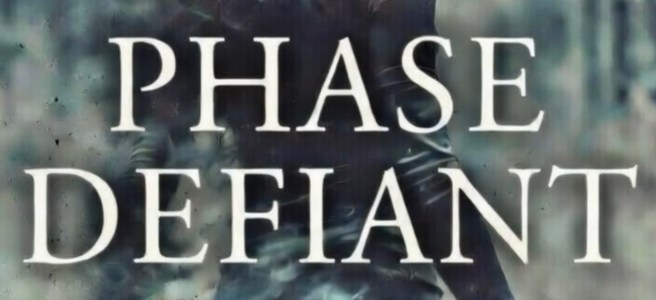
I read Phase Defiant somewhere between eight and ten times before I finished it. Not just to fix it — I’d already fixed a lot of it. I read it because I liked reading it. Every pass, it still struck me. I’d written the kind of book I actually enjoy picking up, in the voice I reach for when I read for pleasure, and it landed on me every single time.

I’m thirty thousand words into a new one — Welcome to New York, a 1920s mob story — and something’s been off, and until tonight I couldn’t name it. The writing is fine. The plot works. I like it, in the way you like something competent. But it doesn’t strike me. I’ve been reading my own pages and feeling nothing move, and I kept telling myself that was normal — that not everything can hit the way the first book did.

Tonight I finally understood why. It’s the voice. It isn’t mine.

When I sat down to write a 1920s gangster story, I decided — without ever really deciding — that the story required noir. Shadowy, clipped, that particular cold register the genre is known for. So that’s what I wrote. Thirty thousand words of it. The trouble is I’m not a noir guy. I love a thriller. I read thrillers, I think in thrillers, and it turns out the story I’m telling would sit perfectly well as one. The genre never asked me for noir. I asked me for noir, because I thought that’s what you were supposed to do with this kind of book.

And here’s the part that actually rattled me: the tell was there the whole time, and it wasn’t in the writing. It was in the reading. The reader in me — the one who read Phase Defiant ten times, part of the process and because I enjoyed every pass — kept picking the new pages up and setting them down unmoved. He knew before I did. The writer had drifted; the reader caught it. I just wasn’t listening to him.

So now I’m looking at thirty thousand words I have to take back apart. Not throw away — take apart, and rebuild in my own register. I’d be lying if I said that felt great. That’s real work I already did, and a good chunk of it doesn’t survive the change. There’s a version of me that wants to argue those words are fine, that finishing matters more than fussing over style, that I should just push through.

But I know what pushing through gets me: a whole book that reads the way these thirty thousand words do — competent, fine, and never quite mine. I’ve already got the proof of what happens when I write in a voice that isn’t my own.

So I’m going back to the start, and this time I’m writing it the way I’d want to read it.

What You’re For

7-40 Challenge | Round 5 Day 5

An AI tool will do almost anything you ask it to. For a while I treated that as the whole point — like the win was the capability. Look how much I can produce now. Look how fast.

But something strange happens when capacity stops being the bottleneck. It exposes the question that was hiding underneath it, and the question turns out to be harder: not can I do this, but is this worth doing at all.

For most of history, “I don’t have the time, the skill, the resources” was a real answer. It was also a hiding place. You could want to do something and be honestly, legitimately unable — and the wanting never had to be tested. AI takes that excuse away. When the tool can draft and edit and organize and produce, when the capacity is just there for the asking, the only thing left standing between you and the work is whether you actually have something you’re trying to do.

That’s where I think a lot of people are going to get stuck. Not because they can’t run the tool. Because they never worked out what they’d point it at. Hand someone all that capacity and no direction, and it becomes an expensive toy — something to kill an afternoon with, to research nothing in particular, to make a little noise.

I know what I’m for. I’m here to honor God with what I do, to love and take care of my family, to do work that’s worth something, and to leave the people around me better than I found them. That isn’t a slogan I keep on a shelf. It’s the thing that tells the tool where to aim.

The capability will never hand you that. It was never supposed to. It only amplifies what’s already there — and if nothing’s there, it amplifies the nothing.

Introducing Myself

7-40 Challenge | Round 5 Day 4

Before I can write a character, I have to introduce myself to them. That sounds strange for people I invented, but it’s the truest way I know to describe it. I have to spend time — not just in the story I want to tell, but in the world they live in — until they stop being pieces I move around and become someone I actually know.

With Phase Defiant, the one I spent the most time with was Tiffany. She’s fourteen. I am not, and never have been, a fourteen-year-old girl. (My wife has, which helped more than she’ll ever get credit for.) So I had to sit with what it would actually feel like to be that age and suddenly have a power you never asked for, while you’re still learning to manage your own emotions. Terrifying. And then the harder part — getting her to find the courage to make the choices the story needed from her. You can’t rush a person to that. You have to know her first.

Early on I wanted my characters to be perfect. Strong, capable, sweeping in to overcome evil, no flaws anywhere. A perfect character, it turns out, can’t tell a story. There’s nothing to watch. You need to see someone face adversity, take the setback, come up short and keep going — and none of that is possible if they were invincible to begin with. So I look for the flaws as carefully as the strengths now, because the two together are what tell me how far I can push a person, and where they’ll break, and where they’ll hold.

And they surprise you. In Phase Defiant, Jennifer started as a minor character — someone in the background at the Overwatch facility, barely a name. But the more time I spent with her, the more I understood she couldn’t stay minor. She ended up a hinge the whole story turns on. I didn’t plan that. I just spent enough time with her to hear who she actually was.

People call that “the characters taking over,” like it’s magic. I don’t think it’s magic. I think it’s what happens when you’ve spent so long inside someone’s head that you can brainstorm from their point of view instead of your own. You’re not being visited. You’ve just finally learned them well enough to stop guessing.

But knowing them that well cuts both ways, and this is the part I didn’t see coming. When you truly know a character, there are stretches of the story where you love them — and the work still requires you to send them somewhere hard. Somewhere they’ll suffer, or fail, or turn into someone you don’t like for a while. If they were strangers, that would be easy. They’re not. I’ve come to care about these people, and then I have to be the one who puts them through the worst of it.

I do it because I can see who they might become. The hard road is the only one that gets them there.

Phase Defiant is available on Amazon.

The Route

7-40 Challenge | Round 5 Day 3

I sat down to work on the novel tonight and didn’t write a single sentence of it. I spent the whole session working out how the major threads connect — how one specific character has to move through the story to get where she needs to end up. No pages. Nothing I could post. If you’d watched me, it would have looked like I was doing nothing but arguing with myself at a desk.

That’s exactly what I was doing. And it was the work.

For most of my life I wrote the other way around. I started with words — got something down, anything, and then went looking for the order afterward. Find the shape in the pile once the pile exists. That’s the advice you hear everywhere, and it’s not wrong. It just isn’t right for this book.

This story has an endpoint. I know where it lands. It’s not the kind of thing that gets to wander off wherever it wants — every thread has to arrive at a specific place, and my job is to navigate the characters there without losing the intent I started with. When you already know the destination, the writing isn’t discovery. It’s routing. And you can’t route until you’ve solved the map.

So the map was tonight’s work. Getting it wrong doesn’t show up as a bad sentence I can fix later — it shows up as a whole climax that can’t exist because I built toward it on a thread that doesn’t hold. Cheaper to find that at the desk, arguing, than four chapters deep.

Here’s the part I have to stay honest about, though, because “I’m working out the structure” is one of the great writer’s alibis. It’s the most respectable-sounding way there is to not write for a year. I’ve done my own version of it.

The tell, for me, isn’t whether pages came out. It’s whether I fought. Real structural work is arguing with myself for hours — turning a problem over, rejecting the easy answer, sitting in the part that won’t resolve. Avoiding looks different. Avoiding is writing down one idea, deciding it’s good, and closing the laptop satisfied. One of those leaves me tired and further along. The other leaves me comfortable and exactly where I started.

Tonight I was tired. The story is the same on the page as it was this morning — not a word of it written — but I know how it moves now in a way I didn’t twelve hours ago.

The Subplot

7-40 Challenge | Planning Week


I’ve been thinking about my life as a story, and about who’s actually holding the pen.

Here’s where I’ve landed. God’s design is the plot. It’s going somewhere, and it reaches its ending whether or not I cooperate. I don’t get to write that. What I get is a subplot — my contribution, my thread — and the story arrives at its destination either along with my work or in spite of it. That’s the whole of my agency. Not authorship of the plot. Participation in it.

It’s a smaller role than I’d like some days. It’s also a bigger one than I usually act like I believe.


The first thing the Bible says about God is that He creates. Before anything else is established about who He is, we watch Him bring order out of chaos — light out of dark, form out of formlessness, something out of nothing. And a few lines later, it says I’m made in His image.

I’ve read past that a hundred times without sitting in what it means. If the defining act we’re shown first is creation, then being made in that image means being made to create. Not necessarily art. Creation in the wide sense — bringing order out of chaos wherever I find it. Leading a team out of confusion. Writing the code that makes the broken thing work. Shaping a song. Raising a kid. Turning a mess into something that holds together. That’s the image. That’s the assignment.

Which means passivity isn’t neutral. When I choose not to bring order out of the chaos in front of me — when I sit on what I was given — I’m not resting. I’m refusing the one thing I was most clearly made to do.


I know this because I did it for years.

I told myself a lot of things during those years. That I was waiting. That the timing wasn’t right. That the plans I talked about would happen eventually. What I was actually doing was burying what I’d been given and calling the hole a virtue. I had a subplot the whole time. I just wasn’t writing it.


I didn’t fix this. I don’t get to fix it once. The choice to participate in my subplot instead of letting the story move on without me is not a decision I made in January and get to coast on. It’s a decision I have to make again every single day, and some days I still lose it. Some days the passivity wins and the chaos stays chaos and the gift stays in the ground.

This is a note to myself, out loud, on a Saturday. The plot is going to reach its zenith with me or without me. The only thing I actually control is whether my thread is part of how it gets there.

Today I have to choose to be. Tomorrow I’ll have to choose again.