Trimmer String

Here’s what I did today.

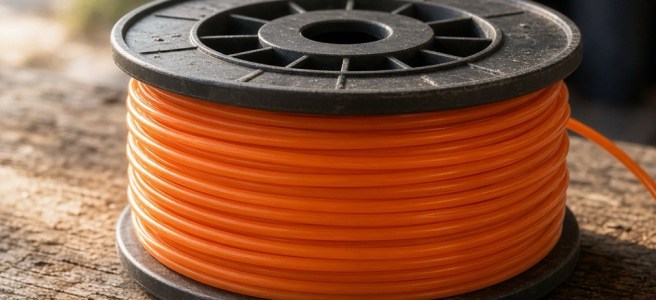
Drove to Lowe’s for trimmer string. Stopped at the grocery store on the way back so I wouldn’t have to come back across town later. Went to church. Came home and mowed the yard and ran the trimmer. Got cleaned up. Went to Costco for the rest of what we needed and put it all away.

Then my son and I went and lifted. Then Trader Joe’s for a few things I forgot. Came home and made dinner. Watched something. Did my Bible pictures. Sat down and wrote this. Spent some time with my wife before she went to bed and played video games with my son after.

There is not one minute of rest anywhere in that.

It was one of the better days I’ve had in a while.


There was a long stretch where a Sunday like that would have bothered me.

I’d get to Sunday night having gotten nothing back — no sleeping in, no lying around, no afternoon where I did nothing on purpose — and I’d feel cheated. Like the weekend had been taken from me by errands.

What I finally noticed is that I was grading my weekend against a picture I’d gotten from somewhere else. Somebody’s idea of what two days off are supposed to look like. Sleep in, do nothing, recover.

I don’t actually want that. I do like rest but I don’t want to do nothing. But I kept measuring against it and coming up short, and the frustration cost me more than the missing nap ever did.


Friday I spent two hours making pizza.

Not two hours of cooking — two hours of dough. Crust and garlic knots from scratch, plus a cauliflower crust for my wife, which if you’ve never done it means ricing the cauliflower and then getting the water out of it, and then getting more water out of it, and then some more. It is a genuinely tedious thing to make, but quite tasty.

Nobody made me do that. I could have bought a pizza in eleven minutes.

We ate it and watched Moneyball, which I hadn’t seen in years and which holds up.

Saturday we hit an estate sale and a thrift store, took the family to lunch at a place we love, and spent the afternoon and evening with friends cooking and talking and laughing.


I’m not going to turn this into a rule, because I know how it sounds coming from a guy having a good stretch.

Plenty of people are running weekends full of things they didn’t choose — a sick parent, a second job, a kid in trouble. Telling them their exhaustion is a framing problem would be insulting, and it isn’t what happened to me.

What happened to me is smaller. Every single thing on today’s list was mine. I picked the yard, the dough, the gym, the groceries, the sitting down to write this. Nothing on there was assigned.

And it turns out that when the whole list is yours, tired doesn’t feel like being emptied out. It feels like the end of a good day.


I am, however, extremely tired.

Going to bed.

Flowering Herbs

There was a Bath & Body Works fragrance in the nineties called Flowering Herbs.

My wife was given a bottle of it in 1994, four years before I met her. She was still wearing it in 1998, the summer we got together — we both turned twenty that year, she’s two and a half months older than me — and every time she came near me that summer she smelled like that.

They discontinued it.


I have spent a substantial part of the last thirty years trying to get more of it.

You can still find bottles on eBay if you’re patient and willing to be unreasonable. I have been both. The last one I bought cost me two hundred dollars.

Sometime in the late 2000s they brought it back as part of a heritage collection. Ten dollars a bottle, sitting on a shelf like it was nothing.

I bought a couple.

I’ve thought about that a lot since. Twenty of them would have covered the rest of her life for two hundred dollars, which is exactly what I later handed a stranger on the internet for one used bottle.


I’ve also just asked.

I’ve stood at the counter in a Bath & Body Works and asked employees how a person goes about ordering custom bottles of a discontinued scent. One woman was genuinely game — said she’d reach out to corporate and see whether they’d sell me some at a reasonable price.

I never heard anything back. I don’t blame them. I imagine that request goes into a system that has no field for it.

I’ll keep checking eBay.


Here’s what I can’t explain properly to anyone who asks why.

It doesn’t smell like a fragrance to me. It smells like being twenty. It smells like a summer where nothing had gone wrong yet and I had just met the most interesting person I’d ever met. It smells like freedom, and like getting away with something, and like my best friend.

Twenty-eight years together and one bottle of it will still put me somewhere no photograph gets me to. I don’t know why smell does that and almost nothing else does.


So if anybody at that company is ever bored and looking for a project.

There’s a man in Oklahoma who would very much like to buy ten bottles of Flowering Herbs at whatever reasonable price you want to name, and he’s been at this a long time, and he isn’t going to stop.

His Hard Hat

My grandfather went to work for Mobil Oil in 1946, right out of the war, and stayed until he retired around 1988. Forty-some years, southwest Oklahoma, running routes as a pumper.

He was a slender man. Five-eight, five-nine, not big. And he had some of the strongest hands of anyone I’ve ever known — grip strength that never left him, even as an old man, forty years of field work still sitting in them.

His left ring finger was gone. Taken off by machinery out on a lease somewhere. You noticed it right away as a kid, because it was simply not there.

I asked about it once and got the story, and I don’t remember who told me.


I don’t have a single full conversation with him.

He was quiet. Quiet voice, reserved, not a man who filled a room or wanted to. Every so often he’d roughhouse with me a little and that was about the extent of it. Questions and answers. Nothing you’d call a talk.

Then Alzheimer’s took most of the years when I might have been old enough to ask him something worth asking.

He was at a family retreat a few weeks before he died in 2005. He was there and he did not look good and everyone could see where it was going. I wasn’t in the room at the end.


Two years after that I started working in oil and gas.

I’ve been in it ever since, going on twenty years now, doing data. Not out on a lease — in front of screens, in offices, arguing about how information moves.

But I’ve been out in the field a couple of times. Toured rigs, watched the guys work, stood where the actual thing happens.

Both times I thought about him.

He pumped wells. I make sure the data coming off them mean something. Two completely different jobs inside the same industry, seventy years apart, and the same industry has now paid for two households of my family.

The thing that provided for his family provides for mine.


I have his hard hat.

I have one of his measuring tools, and some tie pins and things the company gave him over four decades of showing up.

My mother tells me she’s proud of me, and she tells me her daddy would have been too — the career, the places I’ve gotten to work, the kind of work I’ve gotten to do. She’s the one who’d know.

I’d like to have heard it from him. But he was never going to be the man who said it out loud, and I’m not sure it would have sounded like much if he had.


If I got ten minutes with him in his right mind, I know what I’d use it on.

I’d tell him thank you. That I know none of it was easy, and that he paved a road I’m still driving on. That I ended up in his industry without either of us planning it, and that I’m proud to be his grandson.

Then I’d probably shake his hand, and I know exactly what that would have felt like, because that grip is the clearest thing I have of him.

Nine fingers and all of it still there.

Carrying Grandma

My wife’s grandmother died in September of 2004, in her bed, at the end of a long stretch of not being able to eat.

There was a tumor that had closed off her ability to swallow. So she starved, slowly, over days, in her early 80s. Her husband had gone a few years before her and I’ve always believed she was ready to go find him.

When it happened her children were in the room — my mother-in-law, her sisters and brothers. My wife and I weren’t. We’d said our goodbye earlier and gotten to tell her we loved her, which is a thing I’m still grateful we did while she could hear it.

I was twenty-six. We’d been married five years.


Then the men came with the stretcher and couldn’t get it into the bedroom.

I don’t remember the exact geometry of it — a door, a hallway, the way the bed sat. What I remember is standing there while everybody looked at everybody else, and it becoming clear that somebody was going to have to carry her out to where the stretcher could reach.

My mother-in-law asked me.

There’s not much I wouldn’t do for that my mother-in-law. I love her. But I want to be honest about the request, because it was a hard thing to ask, and she asked it anyway, of a twenty-six-year-old who’d been in the family five years. I was ok with it. My wife had a much harder time.

One of my wife’s cousins came in to help. He got a foot, more or less. That isn’t a complaint — I understand it completely and I don’t think he could have done more than he did.

So I picked her up off the bed.


She was not light.

I think people expect that part to go the other way. She’d lost a great deal and she weighed far less than she once had, but she had never been a small woman and she was not a feather in my arms. It took something.

I wasn’t worried about dropping her. I just picked her up and carried her out of the bedroom and into the living room and laid her down on the stretcher. Thirty feet, maybe. Ten seconds of work.

My wife was standing in the living room. She watched the whole thing.

So I set Grandma down, and then I went and put my arms around my wife and told her it was okay.


For her it was awful. I’ve always known that. Her grandmother, her family’s house, and her husband walking through it carrying the body.

For me it was one of the great honors of my life, and I’ve never once been able to explain that to anybody without it sounding strange.

I got to be useful in the one moment where being big and twenty-six was worth something. I’ve spent most of my life being read as more intimidating than I actually am, and here was a room full of people who needed exactly what I’m built like — and I got to lift her carefully, and set her down gently, and step back out of the way.

One of the cousins asked me about it not long ago. Did I remember it.

You don’t forget carrying somebody out. But the part that comes back first isn’t the bedroom or the weight of her. It’s standing in that living room afterward with my arms around my wife.

One Thing At A Time

New round started today, and I’ve spent most of it taking things apart instead of adding to them.

Seven habits, same as they’ve been. Bible reading, calorie tracking, water, exercise, reading, gratitude, and this — the daily writing.

Two of them changed shape, though, and the changes are the whole point.


Bible reading and the picture project are now one habit instead of two.

I’ve been making an image for every chapter I read since January. For most of the year I’ve treated those as separate items on a list, which meant on a busy night I could check one and let the other slide.

So now the reading isn’t done until the picture is posted. One thing, one checkbox, and no version of it where I get partial credit.

The other change is that the blog and my creative work are now the same slot. Not two competing obligations at the end of a long day — one hour, and whatever’s in front of me goes in it.


Which brings me to the part I’ve been circling for weeks.

I have twelve creative projects going. Books in progress, books that need illustrations, an album written and not released, a musical half-drafted, a course outlined, frameworks in various states of almost.

Twelve is not a portfolio. Twelve is a way of always having something to work on that isn’t the hard thing.

So: one product. I finish it. Then I pick the next one and finish that. Everything else is locked — not shelved for the year, not deprioritized, locked — until the thing in front of me is done and out.

The first one is a short guide on intent. It’s the closest to finished and the decision costs me nothing to make, which is precisely why I should have made it in June.

I start on it tonight. When there’s a real draft I’m handing it to somebody outside my own head to read, because both books I published this year got materially better the moment a person who wasn’t me told me what wasn’t landing.


On the fitness side I’m restarting the lifting program from the beginning — six weeks in phase one, six in phase two, six in phase three, which runs almost exactly to the end of the year.

I’m not setting a goal weight. I’ve gone back and forth on a number for months and the number was never the problem. The practice was. So I’m doing the practice daily and letting the scale report whatever it wants to report.

The one thing I am tightening is the tracking. I’ve been estimating my food for months — eyeballing portions, doing the math in my head, calling it close enough. I flagged that as a risk back in the spring and then did nothing about it, and it turned out to be exactly the thing that came apart.

Estimates are not data. I know this professionally. I’ve built a career on the difference and I’ve been running my own body on vibes.


There’s one more thing I’m reconsidering, and I haven’t decided yet.

I’ve been running this year in forty-day rounds. It’s worked well enough. But I’ve noticed the round is the only deadline I have that isn’t attached to anything real — the lifting block has its own clock, the product finishes when it finishes, and the round just ends on a Thursday because forty days elapsed.

At work I’d never structure it that way. At work you commit to a deliverable and a date and you’re done when it’s delivered.

I might just do that here for the rest of the year. Same habits underneath, no calendar theater on top.

Reading comes back tomorrow. That one dropped in the last round and I felt the absence of it more than anything else I let go.