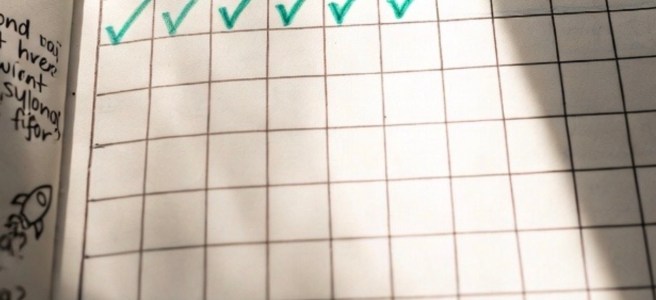
Day 2 of the 7-40 Challenge: Resistance Is the Starting Gun

Welcome back to the 7-40 Challenge—seven core habits, forty days straight, no excuses. If you missed Day 1, here’s the short version: I refuse to drift through life. I’m locking in the seven core habits I described in yesterday’s post. And wouldn’t you know it—Day 2 hasn’t even ended and the challenge is already swinging back at me.

The First Punch Lands

I woke up yesterday with a neck that felt like it had been folded into a suitcase. How? I was asleep. Apparently, in my mid-40s, even unconsciousness is a contact sport. The ache lingered through Day 1, sharpened this morning, and tried to whisper the old lie: “Rest. Skip the workout. Tomorrow’s fine.”

That’s the pattern, isn’t it? The moment you commit, the resistance shows up—on time, every time.

Winston Churchill nailed it during the darkest hours of 1941:

If you are going through hell keep going.

He wasn’t talking about sore necks, but the principle is the same. Obstacles aren’t stop signs; they’re proof you’re moving.

I also like how Steven Pressfield described it in the War of Art:

The amateur believes he must first overcome his fear; then he can do his work. The professional knows that fear is what comes with the territory. He feels the Resistance and does the work anyway.

My Day 2 Reality Check

Exercise: 60 minutes done—stiff neck and all.

Nutrition: Food logged, hydration on point.

Reading: One hour in the books.

Faith: Morning Bible study and prayer, even when the body screamed louder than the spirit.

Gratitude: Sent a personal message to a friend reminding them that I am proud of them.

Writing: This post.

Content Creation: Still learning this but will finish before end of day.

Every checkbox felt heavier than it should. That’s the point. Easy doesn’t forge anything worth keeping.

The Mindset That Wins

Resistance is inevitable. Response is optional.

Napoleon Hill spent 20 years studying the ultra-successful and boiled it down to this:

Every adversity, every failure, every heartache carries with it the seed of an equal or greater benefit.

My seed today? the routine will carry me forward even when everything else wants me to slow down. Lean on the routine and do the work.

The 40-Day Horizon

I’m not here to hit a number on the scale (though it’s trending the right way). I’m here to become the version of me who doesn’t need another reset in 2026. Smarter, stronger, closer to God, useful to people—that’s the target.

Your Turn

How are you doing on your goals? What are you working on? I pray my journey is an encouragement to you. Knowing you are reading these words is an encouragement to me. Thank you for that.

Day 2 is in the books. Day 3 starts at 5:00 a.m. See you on the other side of the alarm.

Press on.

Embarking on the 7-40 Challenge: Day 1 – A Journey Toward Transformation

Hey everyone, welcome to Day 1 of the 7-40 Challenge. If you’re new here, this is my personal dive into self-improvement—a 40-day sprint where I’ll commit to seven daily habits aimed at sparking real accomplishment, momentum, and lasting change. I’ve tackled two rounds of this before, but honestly, each time feels like starting fresh. We’re in this together: I’ll be documenting the highs, the lows, the wins, and the slip-ups right here on the blog. My hope? To push myself further than ever and maybe inspire a few of you to join the ride or craft your own version.

Let’s break down the name: Why 7-40? Numbers carry weight in the Bible, and they’ve always fascinated me. Seven often symbolizes perfection or completeness—like how God created the world in six days and rested on the seventh, marking a divine rhythm of work and renewal. You see it echoed throughout Scripture, from the seven days of creation to the seven seals in Revelation. Then there’s 40, a number tied to transformation and intense periods of trial or growth. Think Noah’s 40 days of rain leading to a new world, or Jesus fasting for 40 days in the wilderness before launching His ministry. It’s a biblical motif for change under pressure, a time when the old gives way to the new.

For me, this structure hits the sweet spot. Long-term goals can feel overwhelming and easy to abandon, but 40 days? That’s bite-sized enough to track progress without losing steam. And seven habits? Just enough to drive meaningful shifts without scattering my focus. As Aristotle once said, “We are what we repeatedly do. Excellence, then, is not an act, but a habit.” That’s the vibe I’m chasing—building excellence through consistent, intentional actions.

So, what are these seven habits I’ll be grinding through for the next 40 days?

1. Daily Bible Study and Prayer: This is my foundation. It grounds me, strengthens my relationship with God, and keeps my priorities straight amid life’s chaos. Without it, everything else feels off-kilter.

2. Nutrition Overhaul: I’ll chug at least 100 ounces of water daily, stick religiously to my calorie goals (tracking every bite), and swear off alcohol entirely. No cheats, no excuses—it’s about fueling my body for the long haul.

3. Exercise Routine: I’ve learned the hard way that without a plan, I plan to fail. So, every day starts with a walk, followed by either weightlifting or yoga, totaling at least an hour. I’ve got programs lined up for both—more on those in future posts. It’s not about perfection; it’s about showing up.

4. Reading for Growth: One hour a day dedicated to books. I’m an audiobook junkie, so expect a lot of listening, but I’ll mix in some physical page-turning too. The goal? Flood my mind with fresh ideas, stretch my thinking, and keep evolving. Knowledge is power, and I’m hungry for it.

5. Gratitude and Encouragement: Each day, I’ll pick one person and send them a thoughtful note expressing why I’m grateful for them and offering encouragement if it fits. It doesn’t need to be epic—just genuine and daily. In a world that’s often too rushed, this is my way of spreading light.

6. Daily Writing: I’ll capture my thoughts on this journey right here, sharing successes, failures, and those “aha” moments. Writing helps me process and stay accountable—plus, it’s therapeutic.

7. Content Creation: Building on the writing, I’ll create short videos or audio clips to share these insights on social media. I’m naturally a talker, so stepping into video feels authentic, even if it’s outside my comfort zone. Time to learn and grow in how I communicate.

Now, for some real talk—because transparency is key here. I’m not some super-motivated guru who wakes up at 5 a.m. ready to conquer the world. Like a lot of us, I default to the path of least resistance. Comfort calls my name, and before I know it, I’ve drifted from my big dreams to the easy routines. Rest is fine—essential, even—but I refuse to let comfort hijack my goals. As C.S. Lewis wisely put it in Mere Christianity, “If you look for truth, you may find comfort in the end; if you look for comfort you will not get either comfort or truth—only soft soap and wishful thinking to begin, and in the end, despair.” That hits home. I don’t want despair; I want purpose.

I’ve got roles I’m proud to own: husband, father, friend, follower of Jesus, businessman, coworker, teammate. In each, I aim for excellence—not just to check boxes, but to honor the people entrusted to me. When it’s all said and done, I want to be remembered as a man who loved God fiercely, loved others as himself, and poured himself out to make his corner of the world better. A guy who cherished his wife and family passionately and left a legacy worth emulating. This challenge? It’s a step toward that—a catalyst for forward motion.

If this resonates, drop a comment below. What’s one habit you’re committing to today? Let’s hold each other accountable. Stay tuned for Day 2—I’ll share how it went and any early insights. Here’s to transformation, one day at a time.

Chasing Purpose Over Perfection: Day 36 of the 7-40 Challenge

Hey there, friends! Welcome to Day 36 of Round 2 of my 7-40 Challenge. Wherever this post finds you today, I hope you’re thriving, crushing your goals, and kicking off the week with a spark. I’ll be real with you—when I glanced at my watch and saw it’s already October 13, 2025, I did a double-take. Time is flying. The older I get, the faster it seems to slip through my fingers. Life’s been a whirlwind lately, and I’ve been wrestling to slow it down and get a grip on the chaos.

That’s exactly why I’m so laser-focused on my daily habits. Without them, time would just flitter away, leaving me at the end of the year wondering, “What the heck happened?” As Benjamin Franklin once said, “Lost time is never found again.” That hits hard, doesn’t it? My daily to-do list is my anchor, guiding me to make sure I’m steering my days with intention rather than letting them drift.

For those who’ve been following along, you know I’m working on seven core habits in this round of the 7-40 Challenge:

1. Daily Bible study and prayer

2. Tracking calories and drinking 100 ounces of water

3. Exercising for an hour each day

4. Reading or listening to audiobooks for 30 minutes

5. Practicing gratitude

6. Writing daily to capture my journey and thoughts

7. Pursuing my business and entrepreneurial goals

If I’m being honest, I’d give myself a B or maybe a B-minus for Round 2. I’ve been rock-solid on some habits, like my Bible study—I just hit three full years of reading the Bible every morning, which feels like a cornerstone of who I am. I’m also pretty consistent with my water intake (100 ounces daily? Nailed it). Reading has been a win, too—I’ve devoured eight books over the last 75 days, only missing one day. Right now, I’m diving into Your Next Five Moves by Patrick Bet-David, Desire by John Eldredge, and Surprised by Joy by C.S. Lewis. Each one’s sparking new ideas and perspectives.

Writing daily has been a game-changer, too. Getting my thoughts on paper (or screen) helps me process what I’m learning and keeps me grounded. It’s like a daily checkpoint to reflect on how I’m doing and what’s on my mind. And gratitude? I’m trying to weave it into the fabric of my days—saying “thank you” for my family, my friends, my job, and the small kindnesses that come my way. As the 17th-century poet George Herbert once wrote, “Thou that hast given so much to me, give one thing more—a grateful heart.” I want gratitude to define me, not just be a box I check.

Now, where I “‘ve stumbled a bit is with my entrepreneurial goals. I haven’t been as consistent as I’d like in chasing those creative and business projects. But here’s the plan: as Round 3 kicks off in a few days, I’m doubling down. I want to get laser-focused and make daily progress on those dreams. The last 2.5 months of 2025 are going to be about clarity and action.

Here’s the thing—I’ve done challenges like this before, whether it’s 75 Hard or ones I’ve cooked up myself. In the past, I’d hit resistance, miss a day, and quit. Then I’d restart, hit another snag, and repeat the cycle. It was exhausting, and honestly, it got me nowhere. Perfectionism was the enemy, leaving me neither perfect nor productive. As C.S. Lewis wisely noted, “You can’t go back and change the beginning, but you can start where you are and change the ending.”

This time, I’m doing it differently. These two rounds of the 7-40 Challenge haven’t been flawless, but they’ve been meaningful. I’ve lost 20 pounds in the last two and a half months. I’ve read more in the past 75 days than I have in years. My mind feels sharper, my days more purposeful. I’m not chasing perfection anymore—I’m chasing purpose and progress. And let me tell you, consistent productivity feels so much better than occasional perfection.

So, how about you? How do you tackle your goals? Do you beat yourself up when things aren’t perfect, or do you give yourself grace and focus on moving forward? I’d love to hear your thoughts—drop them in the comments or shoot me a message.

Thank you for being here, for reading along, and for joining me on this journey. You’re appreciated more than you know. Here’s to winning one day at a time. See you tomorrow for Day 37!

A Quick Note: If you’re curious about the 7-40 Challenge or want to follow along, keep checking in here. I’m documenting the highs, the lows, and everything in between. Let’s keep pushing forward together!

The Joy of Words: Sounding Smart versus Being Smart

You ever find yourself geeking out over something most people overlook? Yeah, I’m one of those guys. The kind who flips through a dictionary for fun, marveling at the sheer arsenal of words we have to express ourselves. It’s wild to think about, isn’t it? We’ve got this vast, vibrant toolbox of language at our fingertips, yet sometimes, we still trip over our own tongues. Or maybe that’s just me.

Let me take you back to my teenage years. While some kids were out perfecting their jump shot or cruising around in shiny cars to look cool, I had a different mission: I wanted to sound smart. My weapon of choice? Big, fancy words. The bigger, the better. Problem was, I didn’t always know what those words meant. Spoiler alert: trying to sound clever often made me look like a total goof.

Picture this: I’m 16, strolling into the Christian bookstore in my small town. The place had this cozy vibe—rows of books, soft music, and the owner, a friendly guy from my church, behind the counter. He asks me how my day’s going, and I, in all my teenage wisdom, respond with a confident, “Very monogamous.” Cue the owner bursting into laughter. For a split second, I consider being offended. What’s so funny? I ask. He catches his breath and says, “Do you mean monotonous?”

Oh. Yeah. That’s exactly what I meant. I had the right idea—my day was dull, same-old, same-old—but the wrong word. Monogamous? That’s a whole different ballgame. I slunk out of the store that day, my ego a little bruised but my curiosity about words fully ignited.

That moment stuck with me, not just because it was embarrassing (though, trust me, it was), but because it was the beginning of a life long enjoyment of language. These days, I’m still all about using a wide vocabulary, but it’s not about looking cool anymore. It’s about the sheer joy of words—their nuances, their histories, their power. Words can lift us up, tear us down, inspire us to dream, or motivate us to act. As the poet William Wordsworth once wrote, “Words are too awful an instrument for good and evil to be trifled with: they hold above all other external powers a dominion over thoughts.” He’s right—words aren’t just sounds or symbols; they shape how we think and connect.

Think about it: words are like tiny time machines, carrying meaning across centuries. They can paint vivid pictures, spark revolutions, or make someone’s day just by being kind. But they can also trip us up, like my “monogamous” mishap. And honestly? That’s part of the fun. Those missteps teach us to slow down, to listen, to learn. They remind us that language is a living, breathing thing—always evolving, always surprising.

I’m reminded of another gem, this time from Mark Twain: “The difference between the almost right word and the right word is really a large matter—’tis the difference between the lightning-bug and the lightning.” That’s the magic of words. The right one can light up a conversation, while the almost right one? Well, it might just leave you blushing in a bookstore.

So here I am, still nerding out over dictionaries, still chasing the perfect word to capture a moment or a feeling. I’ve learned to laugh at my linguistic fumbles and to savor the moments when I nail it. Because at the end of the day, words aren’t just about sounding smart—they’re about connecting, creating, and celebrating the wild, wonderful mess of being human.

What’s your favorite word? Or better yet, what’s the most epic word-fail you’ve ever had? Drop it in the comments—I’d love to hear your stories. Let’s keep the conversation going and geek out over this beautiful thing called language together.

The Power of Talking It Out: Unlocking Better Communication Through Self-Discovery

“Words are, of course, the most powerful drug used by mankind.” — Rudyard Kipling

For the longest time, I thought everyone’s brain worked like mine. I assumed we all processed ideas in the same tidy, linear way. Spoiler alert: I was wrong. It took a few verbal stumbles—moments where my words tripped over themselves—to realize I’m wired a bit differently. When I’m grappling with a complex idea or trying to solve a problem, I need to talk it out. Saying things aloud is like untangling a knotted ball of yarn in my mind—it helps me make sense of the chaos and find clarity.

This process can be a wild ride. Sometimes, I’ll be mid-sentence and hear myself say something that makes me pause and think, “Whoa, that’s not what I meant at all—where did that come from?” Other times, I’ll blurt out a thought and stop, amazed, thinking, “Wait, did I just say that? That was actually kind of brilliant!” Talking out loud is like holding up a mirror to my thoughts, revealing what’s really going on in my head—for better or worse.

I owe this epiphany to my incredible wife. Over the years, we’ve had countless conversations where I’d dive headfirst into explaining something, only to see her brow furrow in confusion. Halfway through my ramble, I’d realize I was lost in my own words, circling around a point I hadn’t quite grasped myself. Recently, I’ve learned to hit the pause button and say, “Hang on, let me talk this out for a minute.” That simple phrase is like a magic wand. It signals to her that I’m working through my thoughts, and it gives me the space to stumble toward clarity. She listens with saint-like patience, and by the end, I’ve often landed on something sharper, clearer, and more meaningful than where I started.

This discovery got me thinking: how often do we misunderstand each other because we don’t realize how differently we process and communicate? How many times have we been this close to a breakthrough in a conversation, only to miss it because we didn’t take that extra step to clarify? I bet it happens more than we think. As the philosopher Epictetus once said, “We have two ears and one mouth so that we can listen twice as much as we speak.” But what if we also need to speak to understand ourselves better?

Communication isn’t something that just happens—it’s a skill we have to hone. It starts with understanding ourselves: how we think, how we express ideas, and what we need to be clear. For me, that means talking out loud and asking for patience while I sort through my thoughts. For you, it might mean writing things down, mulling over ideas in silence, or asking questions to better understand someone else’s perspective.

The beauty of this realization is that it’s not just about me—or you. It’s about creating space for others in our conversations. The next time you’re in a discussion that feels stuck, take a moment to reflect. Are you saying what you really mean? Are you giving the other person room to express themselves fully? One small step—like saying, “Let me think this through out loud” or “Can you help me clarify this?”—can transform a conversation from frustrating to fruitful.

Here’s my challenge to you: Pay attention to how you process and communicate. What’s one thing you can do to make your conversations clearer and more connected? Maybe it’s pausing to gather your thoughts, asking for feedback, or simply listening a little longer. Try it, and you might be surprised at how much easier communication becomes.

Talking it out has taught me that clarity isn’t just about finding the right words—it’s about understanding yourself and inviting others into that process. So, go ahead and have that conversation. Speak, listen, reflect, and repeat. You never know what breakthroughs are waiting on the other side.