One Thing At A Time

New round started today, and I’ve spent most of it taking things apart instead of adding to them.

Seven habits, same as they’ve been. Bible reading, calorie tracking, water, exercise, reading, gratitude, and this — the daily writing.

Two of them changed shape, though, and the changes are the whole point.


Bible reading and the picture project are now one habit instead of two.

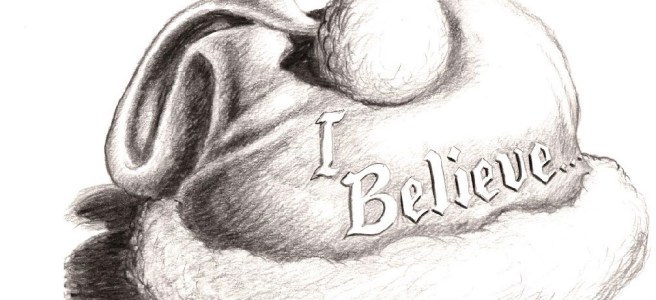
I’ve been making an image for every chapter I read since January. For most of the year I’ve treated those as separate items on a list, which meant on a busy night I could check one and let the other slide.

So now the reading isn’t done until the picture is posted. One thing, one checkbox, and no version of it where I get partial credit.

The other change is that the blog and my creative work are now the same slot. Not two competing obligations at the end of a long day — one hour, and whatever’s in front of me goes in it.


Which brings me to the part I’ve been circling for weeks.

I have twelve creative projects going. Books in progress, books that need illustrations, an album written and not released, a musical half-drafted, a course outlined, frameworks in various states of almost.

Twelve is not a portfolio. Twelve is a way of always having something to work on that isn’t the hard thing.

So: one product. I finish it. Then I pick the next one and finish that. Everything else is locked — not shelved for the year, not deprioritized, locked — until the thing in front of me is done and out.

The first one is a short guide on intent. It’s the closest to finished and the decision costs me nothing to make, which is precisely why I should have made it in June.

I start on it tonight. When there’s a real draft I’m handing it to somebody outside my own head to read, because both books I published this year got materially better the moment a person who wasn’t me told me what wasn’t landing.


On the fitness side I’m restarting the lifting program from the beginning — six weeks in phase one, six in phase two, six in phase three, which runs almost exactly to the end of the year.

I’m not setting a goal weight. I’ve gone back and forth on a number for months and the number was never the problem. The practice was. So I’m doing the practice daily and letting the scale report whatever it wants to report.

The one thing I am tightening is the tracking. I’ve been estimating my food for months — eyeballing portions, doing the math in my head, calling it close enough. I flagged that as a risk back in the spring and then did nothing about it, and it turned out to be exactly the thing that came apart.

Estimates are not data. I know this professionally. I’ve built a career on the difference and I’ve been running my own body on vibes.


There’s one more thing I’m reconsidering, and I haven’t decided yet.

I’ve been running this year in forty-day rounds. It’s worked well enough. But I’ve noticed the round is the only deadline I have that isn’t attached to anything real — the lifting block has its own clock, the product finishes when it finishes, and the round just ends on a Thursday because forty days elapsed.

At work I’d never structure it that way. At work you commit to a deliverable and a date and you’re done when it’s delivered.

I might just do that here for the rest of the year. Same habits underneath, no calendar theater on top.

Reading comes back tomorrow. That one dropped in the last round and I felt the absence of it more than anything else I let go.

The Wall

Christmas of 1997 I asked my parents for a guitar, and they got me one.

I was halfway through my sophomore year, home for the break. I opened the box and I was genuinely thrilled — right up until I got my hands on the neck. It was a beginner’s three-quarter model, and my hands are not small hands.

I remember working very hard at not seeming ungrateful. Dad, this is awesome, I said, I just — I can’t get my fingers where they go.

He said, well, how about we take it back and see what we can find.

My uncle ran a music store in Duncan. We drove it over, got the money back, and he put a Jasmine in my hands — Takamine’s beginner line, full size, light face and darker wood on the sides. Pretty guitar.

Next year I’ll have had it thirty years. It hangs on the wall right inside my office door and I tuned it up this week and it still sounds right. I’ve written twenty or twenty-five songs on it.


I never got any good in the way people mean when they say good.

I started a guitar class in college and it didn’t take, mostly because it was aimed at lead playing and I didn’t want to play lead. I wasn’t trying to be Stevie Ray Vaughan. I wanted to play rhythm, sing, and write my own things, and for that you need chords and patterns and a feel for it, which I taught myself over about three decades.

What stuck wasn’t skill. It was the instrument.


We used to run a booth in an antiques mall, which meant a lot of Saturdays at estate sales looking for things to resell. Some of it we sold. Some of it stayed.

I don’t remember whose house it was. I’ve been to too many. But I walked in and there was a guitar sitting in a hard case, and normally I look right past guitars at these things — the classicals with the dead nylon strings, the corroded wire, the wood that’s been dry in a closet for twenty years.

This one was clean. Solid. Still roughly in tune, which tells you something about whoever had it. I picked it up and it was playable right there in a stranger’s house.

Seventy-five dollars. It’s a Ventura — designed in the States, built in Japan, and the name doesn’t exist anymore as far as I can tell. From what I’ve been able to piece together it was made before I was born.

It hangs next to the Jasmine. Those two are the featured wall in my office, and the Ventura is the one I actually reach for. Lightest strings of anything I own, so it doesn’t hurt my fingers, and the tone on it is rich in a way I didn’t pay for.

Somebody kept that guitar in shape for fifty years and then it came to my house.


I collect a few other things.

Six guitars. Thirty-some pipes, including a Gandalf one my wife gave me one Christmas, because I’ve always loved the stories about C.S. Lewis being absent-minded enough to set his own jacket pocket on fire. A couple hundred records — Bob Seger’s on the player right now. Comic books from years ago, up on a shelf. Cast iron, eight pans in the oven and another twenty-five out in the garage I haven’t gotten to since we moved. Cookbooks, for a project I haven’t started.

And books. Enough books that my wife has, over the years, gently suggested some of them could go. I rearranged them until they fit instead, which she let me get away with.

On our twentieth anniversary we were in Fredericksburg, Texas, and found a charity thrift store with a complete set of the Harvard Classics — the five-foot shelf, early 1900s, all of it. Twenty-five dollars. They sit on top of the china cabinet in my office.

Here’s the honest part about the books, and it took me a while to say it out loud. I’ve read maybe half of them. The rest I know about. I’ve read summaries, I could tell you the argument, I keep them where I can see them.

That’s knowledge near me rather than in me, and I know the difference.


There’s one more thing on my walls and I didn’t acquire any of it.

My son paints and draws. I’ve got eight of his pieces hanging in this office — I can see all eight from where I’m sitting. Drawings and oils.

I’ve told him I’m his collector. That’s the word I use for it, and I meant it as a joke the first time, and then I kept saying it.

Everything else in this room I went and found. Estate sales, thrift stores, a music store in Duncan in 1997. All of it was finished before it got here — somebody else built the guitar, somebody else bound the books, somebody else played the Ventura for fifty years, and I’m the one who came along afterward and put it on a wall.

His are the only ones where the collection isn’t done yet.

Thirty Copies

Around 2013 I was very good at Excel, and Excel was slowly ruining me.

The job needed SQL. I had built SQL up in my head into a wall — I’m a business person, I’d say, not a technical person, and they’ve got me doing technical things. It’ll take too long. It’s too hard. I’m not getting enough help.

So I stayed in the spreadsheet, where I was fast and looked competent.

Here’s the embarrassing part. I was using Excel as a WHERE clause. Dumping data in and filtering it. I was doing SQL’s job, with SQL’s logic, in a tool that made it ten times slower, and calling that expertise.

When I finally sat down and wrote actual queries, the surprise wasn’t that it was worth the effort. The surprise was that it was easier. All that time, the entire barrier had been something I made up.


I wasn’t avoiding SQL because queries were difficult. I was avoiding it because learning it meant putting down the thing I was already good at and being a beginner in front of people.

That’s usually what stuck is. Not missing information — I knew exactly what to do. It was that doing it required becoming a slightly different person than the one I’d already built and gotten some credit for.

The proof is what happened afterward. The guy who insisted he wasn’t an IT person now thinks technically before anything else, has administered systems, and reads through thousands of lines of code to find where a record went missing.

But the belief came after. It always came after. I never once believed I could do the thing until I’d already been doing it for a while, and I have never gotten that order to run the other direction no matter how badly I wanted it to.


Which brings me to the part I’d rather not write.

I have published three books. I’m in the middle of a fourth and a fifth is finished, waiting on illustrations. I’ve sold about thirty copies of everything, combined, in total, ever.

And I have been treating “having my own business” like something mystical sitting out at the edge of my vision. Like it’s a thing other people know how to do and I don’t.

Here’s the problem with that. I sell every single day. It’s most of my job. I walk into offices and persuade people to do things differently, I sell ideas and standards and solutions to problems they didn’t know they had, and I’m good at it — good enough that it’s what they pay me for.

I just can’t do it for my own work.


I know what this is. I recognize every symptom of it, because I spent three years in a spreadsheet running the identical program.

It isn’t a knowledge problem. I don’t need somebody to explain marketing to me. I need to be a man who asks people to buy his book, and I am currently a man who writes another book instead.

Writing another book is the small step. It’s the productive-looking one. It’s the Excel of this whole situation — the thing I’m already good at, done faster and better, in service of not doing the thing.


I don’t have the ending for this one.

A year from now I’ll either have asked somebody to buy something or I’ll have four more books and the same thirty copies. I know which one I’d like to report. I also know that the guy in 2013 knew exactly what SQL was for, and could have told you at length why he should learn it, and sat in that spreadsheet for three more years.

This Is Him

I had a grown man’s voice by the time I was fifteen. On the phone nobody ever knew.

One afternoon somebody from a radio station called the house asking for my dad. He’d won something. All he had to do was be the one to claim it.

Three words. This is him. Nobody in the world would have known — not the station, not my father, not anybody. And I stood there holding the phone and couldn’t make my mouth do it.

I have no idea what the prize was. 1993, some station, some giveaway. We lost out on it.


Years later I walked into a car dealership with I’m a moron written across my face.

The salesman read it in about four seconds and sold me a car I didn’t need for considerably more than it was worth. Six months on I sold it back at a three or four thousand dollar loss. That part was expensive and completely ordinary. Everybody buys the wrong car once.

What I actually remember is the phone call before I gave the car up, when I was broke and couldn’t make the payment and a creditor got me on the line.

He was friendly. Asked about my situation, got me talking, and I told him things — I was young and scared and he was the first person who’d sounded like he cared. Then somewhere in the middle he turned it around and used every bit of it on me. Told me I’d lost the car. Hung up.

He didn’t want the money. If he’d wanted the money he’d have worked out a payment with me. He wanted me frightened enough to find some, and he had a script for producing that.

I made myself a promise after that call. Not at either end of that again. Not that end, and not his.


I’ve been listening to Chris Voss’s book about hostage negotiation, which is a good book, and every time I read one of these I run into the same discomfort. The creditor was a skilled negotiator. He used real techniques competently. He just used them on a kid to take something.

So where’s the line.

Here’s what twenty years of work has shown me, and it’s not what I expected. I’m a data guy. Almost nothing I negotiate involves money. I negotiate for understanding — what gets fixed first, what can wait, what was never actually broken, who owns it. Nobody calls that negotiating. We call it getting things done. It’s two people holding different pictures of the same problem and trying to end up with one.

And in twenty years of that, the people who reach for manipulation are the people who have nothing else to reach for.

I interviewed someone a while back and asked what an acronym stood for. He guessed. Confident, fluent, completely wrong. The next candidate said she hadn’t run into that one, so she’d looked it up, because she was curious. He answered the question and failed it. She couldn’t answer it and got the job.

I wasn’t testing the term. I was testing what happens when they don’t know something.

Same thing runs the other direction. I’ve broken things at work — real things, with consequences. What has always kept me whole is walking in and saying: here’s what’s wrong, here’s what caused it, that was my call and I got it wrong, here’s the fix. People let you back in after that. They keep believing you, and believing you is the only asset in the room that can’t be rebuilt from scratch.

Somebody who actually knows their material doesn’t need a technique. Their standing does the work. Manipulation is what gets installed where credibility should have been — the salesman and the creditor reached for pressure because they had nothing true to offer me.


Except that only explains the part with witnesses.

The fifteen-year-old had no credibility to protect. No boss, no team, no reputation, nobody in the room. A phone, an easy lie, and a prize on the other side of it. Every incentive pointed one direction and there was no cost to lying.

I’ve told that story like it says something good about me, and I’m not sure it does. I didn’t weigh it. I didn’t decide. I stood there and my mouth wouldn’t form the sentence, and I’ve never known whether that was character or just not having the nerve. Truthfully, it was me trying to be honest which is what I want to be. Even if it cost me a prize.


Learning the tools didn’t make me trust persuasive people less. It changed what I listen to. I spend a lot less attention now on how well someone is making their case and a lot more on what’s actually under it — whether there’s anything there when you take the technique away.

The books will hand you every tool in the kit. What they can’t tell you is what you’ll do with them on an afternoon when nobody’s home.

The Rules Behind the Magic

I’ve been building a book about a detective who believes everything has a rational explanation, and I’ve dropped him into a world where magic is real on the first page.

The detective is the Scarecrow. That’s the joke underneath the whole thing — he isn’t an outsider who wanders into Oz skeptical of it. He’s a native. But at the end of the story we all know, the Scarecrow got his brain, and ever since he’s leaned hard into it, becoming the most rigorously logical mind in a land that runs on enchantment. He’s the one figure in Oz actively trying to reason the magic away. His Watson — the one telling the story — is the Tin Man, which feels right, because who better to narrate a tale about the head and the heart than the man who went looking for one of them.

It’s called A Scandal in Emerald, and if that rings a bell, it should. I built it on the bones of A Scandal in Bohemia — the one Sherlock Holmes story where somebody finally out-thinks Holmes. That somebody was Irene Adler, and in my version she’s Dorothy. Not the little girl who wanted to go home. A grown woman who, it turns out, never lost the silver shoes over the desert the way the old books say she did. She kept them. She’s been slipping between Kansas and Oz for years, gathering what she knows, and when she reappears she looks for all the world like the villain of the piece — while she’s quietly trying to save Oz all over again.

So that’s the setup. Here’s the part I actually care about.

When the magic breaks his rules, the Scarecrow does what a mind like his always does: he gets annoyed. He needs an answer. He keeps trying to force the enchantment back into something logical, and when he can’t, it frustrates him to no end. He’s built to reduce the world to explanations, and the world won’t cooperate.

And then he starts to find that the magic has rules.

I don’t have every beat of this worked out yet — I’m still in the outline and the world bible. But the idea driving it is one I believe outside the book entirely. Somebody standing two hundred years ago would look at the world we live in now and call it magic, top to bottom. It isn’t. It’s science finally catching up to what people used to only imagine. Even in Oz, half of what everyone called magic was the Wizard behind a curtain, working the levers. The real work is finding the line: what’s genuinely wondrous, and what only looked like magic until somebody understood how it worked.

Here’s what surprised me about my own detective. Finding the rules doesn’t ruin the magic for him. It makes him love it.

That cuts against the thing everybody assumes — that understanding kills wonder, that the magician who explains the trick has murdered it. But a mind like his doesn’t run on mystery. It runs on curiosity. Take away the puzzle and he goes restless and hollow; he needs something to figure out or the engine turns on itself. So the last thing he wants is for the magic to stay unknowable. He wants to know how it works — and once he does, two things happen at once. He appreciates it more, not less. And he can finally use it, because anything you truly understand becomes something you can put to work.

We’ve got our own magic now. Tools that make the impossible look effortless, that dazzle some people and frighten others. You can stand in front of that and feel small, or you can do what the Scarecrow does and go looking for the rules. Almost everything is learnable, at least far enough to stop being afraid of it. A little reading, a little discernment, and most of the curtain comes down.

That’s the thing I’m really writing about, underneath a mystery in a green city. Not how to escape into a world of magic. How to stretch our minds enough to meet the world we’re actually in — instead of the one we wish we’d been handed.